


Jump on this helpful small business tax break before it ends


Businesses now have less than three months to take advantage of temporary full expensing, the government’s scheme enabling a full deduction against profit for eligible capital asset purchases, writes Mark Chapman, Director of Tax Communications, H&R Block Australia.
Unless the government changes course in the upcoming Federal Budget, the scheme (which has run since October 6, 2020) is set to expire on June 30, 2023.
Temporary full expensing (or TFE for short) allows businesses to deduct the full cost of eligible capital assets from their profit for the year, rather than depreciating the cost over several years.
Using TFE, businesses can immediately deduct the full cost of eligible purchases of capital items including:

To be eligible, businesses must have an aggregated annual turnover of less than $5 billion. ‘Aggregated’ turnover means that the turnover of any parent company (including overseas parents) and subsidiaries need to be included.
In addition, businesses whose aggregated turnover is more than $5 billion but whose Australian income is less than $5 billion can also claim the tax break, provided they have previously spent more than $100 million in the period 2016-17 through to 2018-19. This means that big international companies (whose global turnover often exceeds $5 billion) can potentially still benefit.
In effect, the high turnover threshold means that almost every Australian business is included in the scheme.
TFE applies to new depreciable assets and the cost of improvements to existing eligible assets (even if the existing assets were acquired before the scheme started).
For small and medium-sized businesses (with aggregated annual turnover of less than $50 million), full expensing also applies to second-hand assets. For businesses with an annual turnover of $50 million or more, second-hand assets are excluded.
The main categories of assets that are not eligible for full expensing are:
So-called expensive cars can be written off up to the $64,741 limit (excluding GST) but anything over that cost cannot be depreciated at all. That rule has been in place for many years in relation to car depreciation and has been carried over to TFE. The rule exists, basically, to prevent businesses spending up on lavish luxury cars at the taxpayer’s expense!
Motor vehicles that aren’t regarded as cars for tax purposes are not covered by the expensive car limit. This means that commercial vehicles such as vans, buses and trucks can be fully written-off whatever the cost.
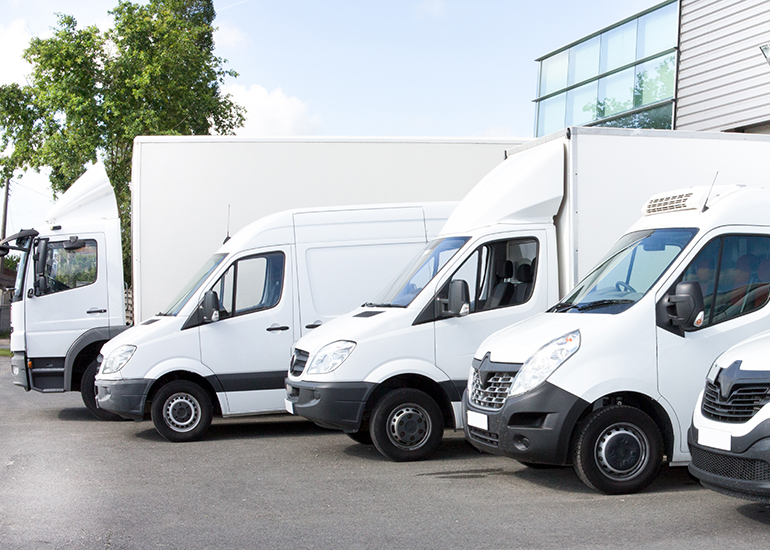
Crucially (for tradies, for example), some of the larger utility vehicles are also regarded as commercial vehicles rather than cars. Basically, if the ute has a carrying capacity of over one tonne (the dealer or manufacturer should be able to confirm this), it isn’t regarded as a car and the car limit does not apply. As some of the bigger, more luxurious utes do cost more than $64,741, this gives a potential opportunity to purchase the vehicle and write off the entire cost.
Note that last exclusion prevents TFE claims for capital assets used in a non-business capacity, such as assets purchased by investment property owners or assets used in your employment.
Any deduction you can claim under TFE must also be apportioned if you use the asset for private purposes. For example, if you purchase a new computer for $2,500 and use it 50 per cent in your business and 50 per cent for personal purposes, you can only claim a deduction for $1,250.
You need to depreciate it over its effective life, which is likely to be several years or possibly even decades.
As currently legislated, instant write-off will not be available for assets acquired from 1 July 2023 unless the asset costs less than $1,000 and the business is a small business (meaning that it has a turnover of less than $10m).
As the threshold for immediate write-off is coming down (very sharply!), it is essential that all businesses with larger capital purchases make those purchases by 30th June 2023. It is worth pointing out that any assets purchased must actually either be in use or installed ready for use by that date in order to qualify for TFE; if assets have been ordered and paid for but haven’t actually arrived at your premises by 30th June 2023 (or they have arrived but they are still sitting in boxes in a corner of your workplace), the instant deduction cannot be claimed.
This article was first published on Kochie’s Business Builders, read the original here.
Join the soloist movement. Whether you are new to Flying Solo or looking to grow your business, our membership options will help you attract more leads, grow your network and sharpen your business skills. Sign up to our newsletter to get the latest news and advice straight to your inbox.
Now read this:
//corestage-cdn.flyingsolo.com.au/news/dont-get-caught-out-by-the-new-work-from-home-tax-rules/
Comments