


IWD: 17 business women who rock the world
Today we celebrate International Women’s Day – especially the incredible women in our Flying Solo and Kochie’s Business Builders community who make a difference every single day.


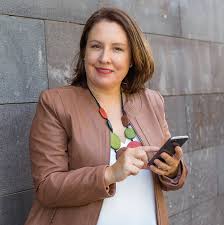
“On International Women’s Day I would like to pay tribute to my inspiring Mum who quietly and powerfully paved the way for my sister and I to get a world-class education, enabling us to engage in meaningful work and create opportunities for our own families. Growing up, gender was never part of the conversation. Reading and education were the priority in my household. My sister and I were the first from our family to go to university, a fact that my parents were very proud of. Both my Mum and Dad, due to family circumstances, had not completed year 12, and successfully did so as adults. Dad went on to complete his tertiary education as a mature aged student soon after my sister and I completed our tertiary studies. Returning to postgraduate studies in 2008, after having my two boys, I reflected on my Mum’s journey and the sacrifices she made in her life for her family. Mum never made it to university, which is something she regretted and attributed to having to ‘hold down the fort at home’. When she was accepted into Teachers College she had two young children and a husband who worked full time and also played competitive tennis outside of work hours. Yes – there was lots of washing! Mum was a clever kookaburra, loved to read and often discussed local and world events. Her passive activism planted seeds in my mind about what it meant to be Australian, our opportunity to better recognise indigenous Australians and the increasingly important economic role we played in the Asia Pacific region. This was her way of changing the world.
On this IWD I encourage you to acknowledge the communities who have come before you and to thank them for their positive contribution to the society we now live in. While there is still much work to be done on the climate, reconciliation and family violence frontiers, we have far greater choices for ourselves and our children than 25 years ago. Don’t be afraid of the news and current events. Be the change. And, as Thoreau suggests, go confidently in the direction of your dreams and live the life you imagined for yourself.”
Karen Hollenbach, founder of Think Bespoke
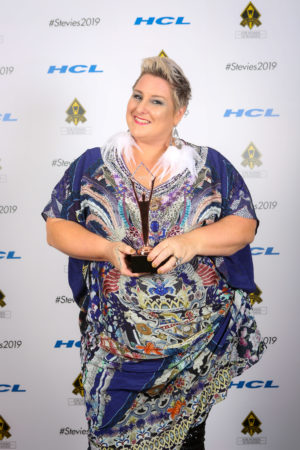
“I’ve lived through the heady days of the 80s where my bottom was pinched, I was harassed as I walked home from work by men calling out from their cars, and I was expected to get the coffee at meetings. Sliding into the 90s, not much changed; I’d pick up dry cleaning, get hit on by the senior executives who felt they had the power to do so and do errands for my male bosses, while watching my male peers get slaps on the back and invites to the pub for a beer. By the time I hit the 2000s, I was a new mum and my male boss didn’t think I could cope with part time hours and a new baby. I was the lowest paid in the team despite being responsible for 60 people. I’ve sat in meetings where I have offered my advice to have it ignored and then see the older man parrot what I’ve said, and it be applauded. It was not until I was in my late 40s and in small business that International Women’s Day came onto my radar. It’s important to honour women who have paved the way for so many, but it is also a day that reminds me of how far we still have to go. IWD has done much for reminding society of the value women bring to this world. It honours the struggles, the barriers broken and the voices unheard but are the right people hearing the messages? Women are still underpaid and overlooked . Being in business for myself means I control my fortunes. I choose who I work with. I wonder if the workplace has changed in the seven years since I left corporate life? I know that in my circles IWD is celebrated because women are flocking to small business like not other time in history. We are sisters doing it for ourselves. Yet, the fact we have to have a day just for women demonstrates there is still a gap between genders. I welcome the day when we do not have to dedicate one day to women. I don’t need a day to remind me of all I have achieved…just like I don’t need Mother’s Day or Valentines Day. A single day is not enough to bring the balance to the force. We need every day to be people’s day, reminding us all of the time of the amazing contributions humans make to this world…every day, every week and every year.”
Annette Densham, founder of Publicity Genie
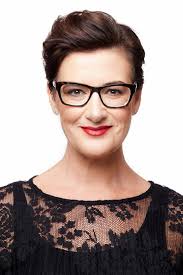
“In my experience, the significance of IWD has really grown over the last few years. When I was working in corporate 10 plus years ago, it felt like the recognition of IWD was more a token gesture, lip service was paid, but there did not seem to be a lot of depth. Over the last 3-4 years in particular I have seen a real growth in the prominence of, discussion about, and celebration of IWD which is fantastic. Without question, as a speaker IWD has had a significant and very positive impact on my business – with a greater focus by big business to hold IWD events to recognise and celebrate their amazing women employees, women customers and other women stakeholders.”
Kate Christie, founder of Time Stylers and author of new book “Me First: The Guilt-Free Guide to Prioritising You”
“In the quarter-century since IWD, business has changed ALOT. When I started in journalism, I had male editors ask me to wear shorter skirts into work! And women HAD to wear skirts or dresses and pantyhose to work! That sexism is not acceptable today thanks to strong communication and awareness campaigns such as IWD. In the 25 years since IWD started, I have worked in a world where I have been able to pursue my career goals, run my own business, and equally share parenting responsibilities with my husband with no issues for either of us. We have both benefitted from more fulfilling relationships with our children and a better work/life balance as a result. We still have a long way to go, in terms of equal pay (male counterparts successfully charge up to twice my hourly rate for the same service). Women also need more seats on boards and in the C-Suite. We are still woefully under-represented at senior management level.”
Fiona Hamann, founder of Hamann Communications
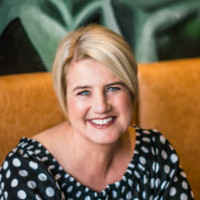
“I always enjoy celebrating IWD because it proves I am not alone when it comes to riding the small business rollercoaster. It’s a timely reminder that my experiences are usually shared with other female entrepreneurs and that gives me the strength to continue and inspiration to celebrate achievements. Together we support and help one another – often without even realising it!”
Leanne Faulkner, founder of Fortitude at Work
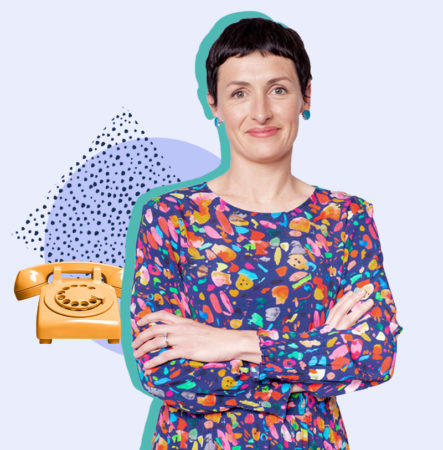
“Women’s inequality stems back to early roots, International Women’s Day to me is a day to not only reflect on how far women have come and acknowledge we still have a way to go, but importantly to celebrate the leaders and changemakers that had the vision and tenacity to advocate for a world where women had the right to vote, to partake in the financial system, to have control of their bodies. Running Verve Super, a business that advocates for women, I draw significant energy each year from IWD celebrations, fuelling me to continue to use our organisation as a catalyst for change.”
Zoe Lamont, founder of Verve Super
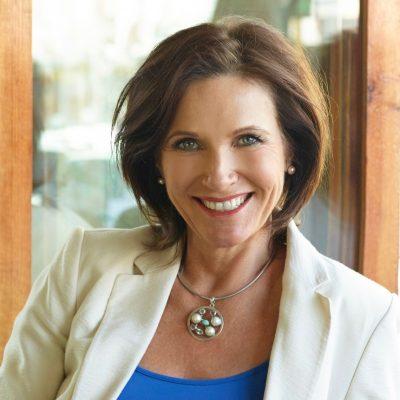
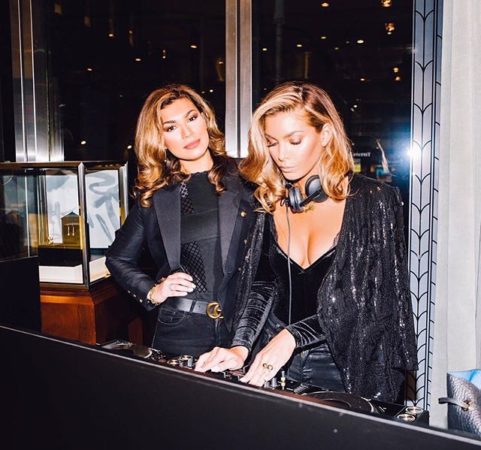
International Women’s Day has become more than just a day merely about women. It has become an opportunity to highlight the struggles women go through daily and unites us as a community to help find solutions and pathways of hope. Government, business and organisations are now paying attending to groups such as Western Sydney Women which helps spread the word on all the free programs we have to help women become economically independent and confident.
The only negative is that it has an expiry date. We need this same attentiveness and focus to help disadvantaged women and profile successful women all year round.
Amanda Rose is an entrepreneur and the founder of Western Women Sydney and the Women in Aviation Program.
“In 25 years the process of change has been very slow. I applaud the male role models that are making a stand for their wives, sisters, colleagues and daughters. The industries I’ve worked in (fashion and health) have always been very female-dominated, so the question of achieving diversity for me, has meant transitioning from an all-female team to a diverse staff of different genders, races, age and background.”
Anneke van den Broek, CEO and founder of Rufus And Coco, NSW Business Woman of the Year.
I’d always had a clear vision of what I wanted to do with my life – writer, journalist, story-teller, change maker. I used to hide in the library at lunch time in high school, more obsessed with reading stories of female freedom fighters and women starting major corporations than the latest antics of my friends on the playground. I thought success would come from hard work – I’d seen that on the pages of the women’s biographies I consumed – and so I was determined to do the same.
We are the generation of women told we can do anything, and so like most of us, I nodded and agreed and set out to do everything. Including motherhood, on top of it all.
I know now that it’s called the Maternal Wall – the wall many working mothers run into as they try and build their career alongside their families.
But when I hit my own wall, pregnant with my third child and producing the leading radio program in Sydney in the middle of a federal election, I didn’t know that’s what happened.
I thought my body just couldn’t cope.
Seven years later, I now realise that the wall I ran into was not of my own making. It came from a system that has been built in which women are expected to work as if they don’t have children and have children as if they don’t work.
This is the flawed system we have inherited, and what I see so many mamas struggle with now.
Amy Taylor-Kabbaz is a writer, producer, speaker and mother to three young children. She is a best-selling author, the host of the ‘The Happy Mama Movement’ podcast
On the eve of International Women’s Day for the new decade, financial inequality persists for women especially when it comes to superannuation.
There are 1.8 million women in Australia who are doing unpaid work looking after children or the elderly and of course they’re also not being paid super, and as a result of these things like the exorbitant cost of childcare, the reliance on women to do unpaid work and the gender pay gap, we’re now in a situation where women only have enough money to live in retirement for six years on average.
We’re heading for a tsunami of super deficiency and actually it’s already almost here, with 40 per cent of single women retiring into poverty, which in a rich country like Australia is nothing short of disgraceful and ridiculous.
Pascale Helyar-Moray is the co-founder of Super Rewards and the director of the Australian Gender Equality Council
This year’s International Women’s Day theme ‘Each for Equal’ encourages us to challenge stereotypes and bias, as well as to celebrate women’s achievements. Great sentiment: yet it’s hard to put it into practice, as 109 years’ of International Women’s Days hints at.
Traditionally, we expect women to be warm, kind, gentle, and understanding while we expect men to be tough, competitive, assertive and competent. We associate women with nurturing, support and lower status roles while we associate men with power, authority and higher status. We like women and respect men. While these are traditional views, and some of us don’t like them much, they persist.
A hefty part of the gender bias problem is that it’s not always possible to know when you’ve made a decision, let alone whether it was fair or biased.
Dr Karen Morley is an authority on the benefits of gender balanced leadership and how to help women to succeed at work. She is the author of Beat Gender Bias: How to play a better part in a more inclusive world; Lead like a Coach: How to Make the Most of Any Team; and Gender-Balanced Leadership: An Executive Guide.


Leadership positions in society should reflect our society. Indigenous people, in general should be playing a strong and decisive part in their own affairs.
Australia has a way to go until the positions of power and leadership are held by people who reflect the diversity of the nation. ‘It’s really important that Indigenous people, including Indigenous women, are empowered to lead and have a fair say in the decision making that the government makes about their affairs.
Dr Shirleen Morris is an Academic Fellow at Trinity College and an indigenous constitutional law expert.
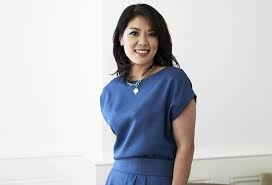
I strongly believe in the importance of role models. Seeing people succeed who look and sound like you helps you to raise your sights and believe that you can achieve what they’ve achieved.
Having the right mentor and support network can build confidence, get rid of imposter syndrome and give people the courage to turn that idea into a business. Women also tend to value external networks more than men, yet in the entrepreneurial ecosystem, women are far less likely to have an entrepreneur in their network.
Carrie Kwan is a serial entrepreneur and co-founder of Mums & Co.
Comments